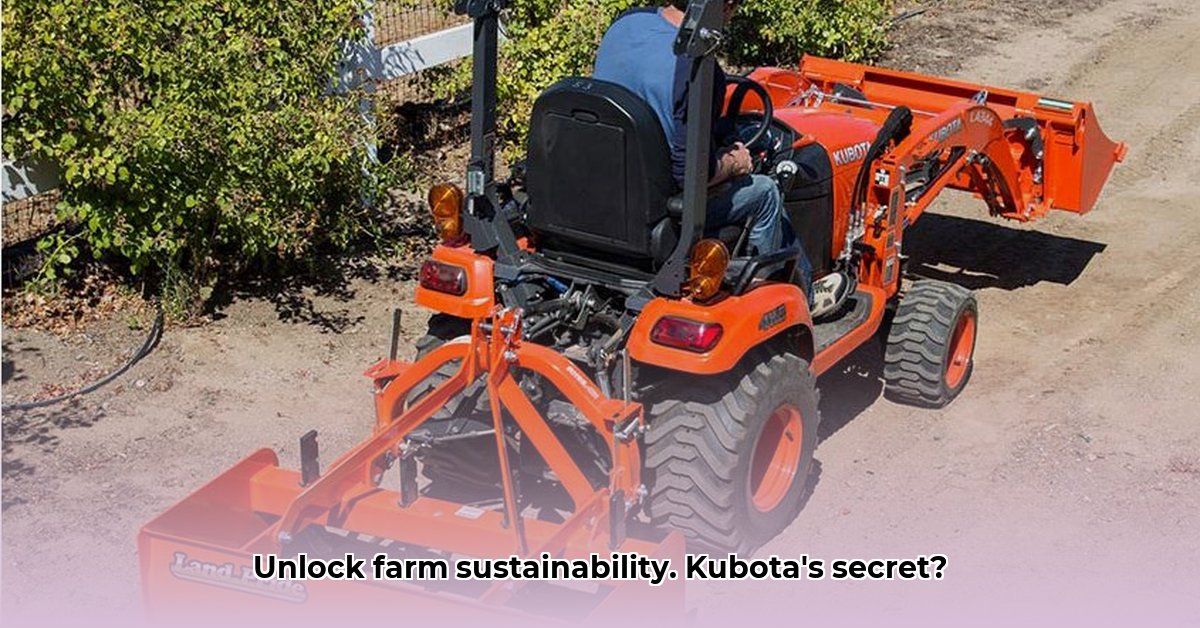
Kubota Sub-Compact Tractors: Small Machine, Big Impact on Sustainable Farming
Farming is facing unprecedented challenges: rising fuel costs, environmental concerns, and the imperative to produce more food sustainably. Kubota sub-compact tractors offer a powerful solution, enabling farmers to boost profitability while minimizing their environmental footprint. These aren't your grandfather's tractors; they're engineered for efficiency and versatility, designed to make sustainable farming practices easier and more effective. This guide explores how their fuel efficiency, advanced technology, and adaptability contribute to a greener, more profitable future. For more information on Kubota's mini tractors, visit this page.
Fuel Efficiency: Saving Money, Saving the Planet
Fuel is a major expense for farmers, impacting both profitability and environmental impact. Kubota sub-compact tractors are designed for optimal fuel efficiency. Their engines are engineered for maximum power output with minimal fuel consumption. This translates to significant cost savings over the tractor's lifespan. Independent studies suggest fuel savings can range from 15-30%, but this varies depending on the model and usage. What percentage of your current fuel budget could you reinvest in your farm with such savings? This reduction in fuel use also directly translates to a smaller carbon footprint, contributing to cleaner air and a more sustainable farming operation.
Low-Impact Technology: Gentle on the Land, Tough on Weeds
Modern sustainable agriculture demands precision and minimized environmental disruption. Kubota sub-compact tractors often incorporate features to achieve this. Advanced emission control systems significantly reduce harmful pollutants. Specialized tires minimize soil compaction, crucial for maintaining soil health and preventing erosion. Reduced compaction also improves water infiltration, supporting healthy crop growth, even during dry periods. These technological advancements represent a commitment to both present and future land stewardship.
Versatility: A One-Stop Shop for Farm Tasks
Kubota sub-compact tractors offer unmatched versatility. One machine can handle a wide range of tasks, from preparing seedbeds for delicate seedlings to cultivating cover crops for soil improvement. They’re equally adept at mowing pastures, hauling supplies, and much more. This versatility translates into significant time savings, reduced labor costs, and less equipment to maintain – all essential aspects of creating efficient and sustainable operations.
Case Study: From Challenge to Success
John, a small-scale organic farmer, previously struggled with outdated, inefficient equipment. His old tractor was fuel-intensive, frequently causing soil compaction. After transitioning to a Kubota sub-compact tractor, he experienced a dramatic improvement. Fuel costs decreased significantly, soil health improved, and overall efficiency increased. This allowed him to focus on other aspects of his farm, leading to improved yields and overall farm profitability. John’s story exemplifies the transformative power of combining sustainable practices with efficient machinery.
Environmental Benefits: A Ripple Effect of Positive Change
The benefits of Kubota sub-compact tractors extend far beyond fuel efficiency. Reduced soil compaction fosters better water retention and nutrient cycling, leading to healthier, more productive soil. Lower emissions contribute to cleaner air. The versatility of the machines reduces the need for additional equipment, further minimizing the overall carbon footprint. This demonstrates the significant impact such a seemingly small change can have on environmental sustainability. Consider the collective impact if numerous farmers adopted similar strategies.
Kubota Sub-Compact Tractors vs. Traditional Tractors: A Comparison
| Feature | Kubota Sub-Compact Tractor | Traditional Tractor |
|---|---|---|
| Fuel Efficiency | Significantly Higher | Lower |
| Maneuverability | Excellent | Often less maneuverable |
| Environmental Impact | Significantly Lower | Potentially higher due to fuel use, etc. |
| Initial Cost | Moderate (varies by model) | Generally Higher |
| Maintenance Costs | Generally Lower | Often Higher |
Note: Specific costs and performance vary depending on the model and individual farming practices.
Taking the Next Steps: A Roadmap to Sustainable Farming
Ready to embrace sustainable farming practices? Follow these steps:
- Research: Carefully analyze Kubota sub-compact tractor models, considering horsepower, attachments, and size to determine the ideal fit for your needs and budget.
- Consult: Engage with fellow farmers, agricultural extension agents, or Kubota dealers to gather insights and advice. Learning from others' experiences is invaluable.
- Budget: Thoroughly assess the tractor's initial cost, ongoing maintenance, and fuel expenses. Compare these to your current costs to calculate potential savings.
- Finance: Explore financing options through Kubota or other lenders to simplify the purchase process.
- Implement: Integrate the tractor gradually into your farming activities.
- Monitor: Track fuel usage, soil health, and other key metrics to evaluate the tractor’s impact on your farm’s sustainability.
Investing in a Kubota sub-compact tractor isn't just about acquiring new equipment—it's an investment in creating a more sustainable and profitable future for your farm and for the planet.